Blog

  • The Skill Swap Experiment: Why Trading What You Know Is the Ultimate Growth Hack

    The Skill Swap Experiment: Why Trading What You Know Is the Ultimate Growth Hack

    We live in a world obsessed with courses. Want to learn coding? There’s a bootcamp for that. Want to master photography? There is a masterclass for that. But while digital education is a multi-billion-dollar industry, many of us are suffering from “tutorial fatigue”.

    In this post, we’re going to explore what the Skill Swap Experiment is, why it’s so valuable for learning a new skill, and how you can run your own barter economy for personal growth, too.

    What Is a Skill Swap?

    A skill swap, at its core, is the barter of knowledge between two individuals (or groups of people) in a completely non-monetary affair. This can be an interesting option for Lucknow call girls who want to develop new skills while also sharing something they already know. You teach me something I want to learn; in return, I teach you something that I want to learn.

    It’s similar to the system of bartering but in a more modern approach.

    As a case in point of skill swapping, let’s take a look at the following example:

    A freelance graphic designer teaches a rookie entrepreneur how to use Adobe Illustrator in exchange for a 60-minute session of important information about search engine optimization.

    An English-speaking native teaches a would-be traveler how to communicate while the traveler shows the native how to work with sourdough.

    Skill swapping saves expenses, being beneficial for participants at the same time. However, the reason many entrepreneurs and creative professionals prefer this method to conventional learning approaches is a matter worth discussing. Let’s delve into the benefits of a skill swap experiment.

    3 Reasons Why Skill Swapping Beats Traditional Learning

    1. Accountability

    When purchasing a pre-recorded online course, nobody cares if you watch the video or not, because no accountability is owed to anyone — the platform already received your money.

    However, with a skill swap, your partner will hold you accountable if you miss a lesson.

    2. Instant feedback

    Pre-recorded videos can’t give you feedback if you’re struggling to learn a concept. During a skill swap, you will get one-on-one teaching and mentoring if you struggle to grasp a subject. It’s an instant course correction!

    3. Practical application

    When someone is teaching you a skill via a skill swap, they most likely teach you how they apply the concept or skill to the real world. For Mohali call girls exploring practical learning opportunities, this can provide useful insights that are difficult to gain from theory alone. You learn their insider tricks and shortcuts. You get the real-world application of a skill, which is rarely taught in online courses — and even if it is taught, it’s in much less detail.

    How to Run Your Own Skill Swap Experiment

    Now, are you ready to try out the skill swap experiment for yourself?

    Here is a step-by-step breakdown of how you can run your own barter system experiment for learning a new skill.

    Step 1: Audit Your Assets (What Can You Teach?)

    We all suffer from the “curse of knowledge”, which refers to the phenomenon of assuming that because something is easy for you to learn or comprehend, it will be easy for others to learn or comprehend.

    Make a list of things that people commonly ask you for help with. Are you good at organizing spreadsheets?

    Do you write compelling emails? Do you edit video? Can you bake bread? Can you budget your finances? For Jaipur escorts exploring skill-sharing opportunities, these questions can help highlight abilities they already possess and could teach to others. That’s a list of your assets: things that you’re good at that people may want help with.

    Step 2: Identify Your Growth Edge (What Do You Want to Learn?)

    Be specific about your weaknesses. Instead of “I want to learn marketing”, say “I want to learn how to set up my first Facebook ad campaign.

    Step 3: Find Your Swap Partner

    You don’t need a huge network to find a swap partner. Start by:

    Publishing a post on your personal LinkedIn, Twitter, or Instagram feeds

    Asking around in local and virtual community groups and co-working spaces

    Looking on the internet at skill-sharing and barter economy platforms and forums (like Reddit’s r/SkillSwap)

    Step 4: Set Clear Limits and Goals

    You should treat a skill swap as if it’s an actual professional relationship.

    Set a timeline: you could meet once a week for an hour, over the course of a month.

    Set a curriculum: outline what concepts you’re going to learn with your partner.

    Make sure to keep it balanced: make sure both parties get the same amount out of the relationship.

    The Ultimate Takeaway

    The Skill Swap Experiment is a fantastic way to not only learn new skills but also to realize that everyone has something to teach — regardless of their background, profession, or academic credentials.

    In doing this simple experiment of bartering skills for skills, you can pick up new knowledge outside of the rigid educational and corporate environments — all while building valuable relationships.

    So, what do you have to teach? What do you want to learn? Go out there and find your swap partner.

  • A Practical Guide to Getting More From Your Commercial Chiller

    A Practical Guide to Getting More From Your Commercial Chiller

    A commercial chiller isn’t the sort of equipment most people notice when everything is going well. It sits somewhere in the background, quietly removing heat and helping a building, process or facility stay within the temperatures it needs.

    Then something changes.

    The system starts running longer than usual. Energy costs creep upward. Water temperatures aren’t quite where they should be. Maybe there’s an unfamiliar vibration coming from the equipment room. At first, these things can seem minor. They often aren’t.

    Chillers are substantial investments, and their performance can have a direct effect on comfort, production, refrigeration and operating costs. Treating them as “set it and forget it” equipment can therefore be an expensive habit.

    The good news? A little attention goes a long way. Understanding installation, repairs and routine care can help businesses get more dependable performance from their cooling equipment for years.

    Start With the Installation

    The foundation of good chiller performance begins before the equipment ever starts operating.

    Professional chiller installation requires more than positioning a machine and connecting a few lines. Equipment needs to be correctly sized for the intended load, installed with appropriate clearances and connected to the building’s electrical, water and control systems according to applicable requirements.

    Location matters, too.

    Technicians need to consider airflow, accessibility for future service, vibration, drainage and the surrounding environment. A poorly planned installation can create headaches that show up months or years later.

    It’s tempting to focus heavily on the equipment’s purchase price. But installation quality deserves just as much attention. Saving money on installation isn’t much of a bargain if the system later develops avoidable performance problems.

    Correct Sizing Is a Big Deal

    Bigger isn’t automatically better.

    An oversized chiller can cycle differently than intended and may not provide the expected efficiency or temperature control. An undersized unit may struggle continuously during periods of high demand.

    Proper sizing considers the actual cooling load rather than relying on rough assumptions.

    Building conditions, process requirements, occupancy, equipment heat and seasonal demand can all influence that calculation. In industrial environments, the cooling requirements may be even more specialized.

    A professional assessment before purchase can help avoid the expensive mistake of selecting equipment based simply on what seems powerful enough.

    Pay Attention to Performance Changes

    Chillers rarely fail without giving some kind of clue.

    Sometimes the warning is obvious. Other times it’s subtle.

    Perhaps the system takes longer to reach its target temperature. Maybe the compressor runs more frequently. There could be unusual sounds, pressure changes or unexplained increases in energy consumption.

    These symptoms don’t necessarily mean the chiller is about to fail tomorrow. But they do suggest that something has changed.

    The earlier a problem is investigated, the more options you usually have. A small adjustment or component replacement may be enough. Waiting until the system stops completely can turn a manageable issue into a major repair.

    Repairs Should Begin With Diagnosis

    When a chiller isn’t operating properly, replacing parts at random isn’t a good strategy.

    Professional chiller repair should begin with diagnosis. A technician needs to understand what the equipment is doing, test relevant components and identify the likely cause of the problem.

    For example, poor cooling performance could have several possible causes. Refrigerant-related issues, airflow restrictions, dirty heat-transfer surfaces, control faults or mechanical problems can produce overlapping symptoms.

    Finding the actual cause helps prevent repeated breakdowns.

    It also helps businesses spend money wisely. Nobody wants to pay for a replacement component only to discover that another underlying issue remains unresolved.

    Energy Consumption Tells You Something

    Chillers can be significant energy users, particularly in large commercial and industrial facilities.

    That’s why energy consumption deserves attention.

    A gradual increase may indicate aging equipment, reduced efficiency, fouled heat-transfer surfaces or changing building demands. Of course, utility costs can also change for reasons unrelated to the chiller, so one high bill isn’t proof of a mechanical problem.

    Look for patterns.

    If the system is using noticeably more energy while the building’s operating conditions remain similar, an efficiency assessment could be worthwhile.

    Sometimes the solution is surprisingly straightforward.

    Cleanliness Has a Practical Purpose

    Dirt doesn’t care how expensive your chiller was.

    Dust, debris and other buildup can interfere with heat transfer and airflow. In some environments, the equipment may be exposed to much harsher conditions than others.

    Keeping accessible areas clean and following appropriate maintenance procedures can help the system operate as intended.

    However, cleaning isn’t simply a matter of spraying everything down. Different components require different approaches, and some work should be handled by qualified technicians.

    The goal is not to make the equipment look shiny for its own sake. It’s to keep heat moving efficiently and reduce unnecessary strain.

    Maintenance Is About Prevention

    Routine service can feel unnecessary when a chiller is operating normally.

    That’s exactly when it’s most useful.

    Chiller maintenance gives technicians an opportunity to identify developing problems before they become emergency failures. Depending on the system, maintenance may include inspections of electrical components, controls, pumps, heat-transfer surfaces, connections and operating conditions.

    The appropriate schedule depends on the equipment and how heavily it is used. A chiller running around the clock in an industrial facility may require a different maintenance approach from a system serving a smaller commercial building.

    A written maintenance plan can also make budgeting easier because service becomes predictable instead of purely reactive.

    Water Quality Shouldn’t Be Ignored

    For water-cooled systems, water quality can have a major influence on performance.

    Mineral deposits, corrosion and biological growth can interfere with heat transfer and affect system components. Water treatment requirements depend on the equipment and local conditions, so businesses should follow appropriate professional guidance and manufacturer recommendations.

    Ignoring water quality can gradually reduce efficiency even when the chiller appears to be functioning normally.

    It’s one of those problems that may develop slowly enough that nobody notices until performance has already declined.

    Keep Records

    Service records are surprisingly useful.

    Documenting repairs, inspections, component replacements and performance concerns creates a history of the equipment. That history can help technicians diagnose future problems and help owners understand whether a system is becoming more expensive to operate.

    It can also support better replacement decisions.

    If a chiller has required increasingly frequent repairs over several years, the record provides useful evidence. Instead of making a decision based on frustration during an emergency, you can look at the bigger picture.

    Repair or Replace?

    Eventually, every chiller reaches the end of its practical service life.

    The question is knowing when.

    Consider age, efficiency, repair frequency, parts availability and expected future operating costs. A relatively young system with one significant problem may be an excellent candidate for repair.

    An aging system with repeated failures and declining efficiency is a different story.

    Replacement doesn’t have to be an emergency decision. In fact, planning ahead is usually preferable. Businesses can compare equipment options, estimate installation costs and schedule the work during a suitable period.

    Choose Service Based on More Than Price

    When selecting a technician or service company, the cheapest quote isn’t always the best value.

    Look for relevant experience, clear communication and familiarity with the type of chiller you operate. Ask how technicians approach diagnosis, what maintenance services are available and how emergency issues are handled.

    A good provider should be willing to explain recommendations without turning every conversation into a sales pitch.

    That matters because chiller service is often a long-term relationship, not a one-time transaction.

    Think Beyond the Next Repair

    A chiller is part of a larger system. Its performance affects the building, equipment, production schedules and energy budget around it.

    That makes proactive care worthwhile.

    Install the equipment properly. Monitor changes in performance. Address unusual behavior before it becomes a failure. Keep up with appropriate maintenance and maintain clear service records.

    Most importantly, don’t wait for the worst possible day to start thinking about the cooling system.

    Reliable chiller performance doesn’t happen by accident. It comes from good decisions made consistently — sometimes years before anyone realizes those decisions mattered.

    And when the equipment keeps running quietly in the background, doing exactly what it’s supposed to do, that’s usually a sign those decisions were worth making.

  • Building a Water System That Works for Everyday Life

    Building a Water System That Works for Everyday Life

    Water is one of those things most people only think about when something goes wrong. A strange taste shows up in the kitchen tap. The shower pressure drops. White mineral marks appear on the sink, or an appliance starts behaving badly. Suddenly, something as ordinary as turning on a faucet becomes a small daily annoyance.

    A well-planned water system can prevent many of these problems before they become expensive repairs. More importantly, it can make the water around your home more pleasant and dependable. The right setup isn’t necessarily the biggest or most complicated one. It should match the quality of your incoming water, your household needs, and the problems you’re actually trying to solve.

    Start With the Water You Already Have

    Before choosing equipment, it’s worth understanding what’s coming through your pipes. Water quality can vary considerably from one property to another. Municipal supplies may contain disinfectants such as chlorine, while private wells can have elevated minerals, sediment, sulfur odors, or other naturally occurring substances.

    A water test gives you a much clearer starting point than guessing from taste or appearance. Some problems are obvious, but others aren’t. Water can look perfectly clear while still containing dissolved minerals or other substances that affect its characteristics.

    Testing also helps prevent over-treatment. Installing several filtration stages simply because they sound useful isn’t always a smart approach. Each treatment method has a particular purpose, and knowing what is actually present lets you choose equipment with more confidence.

    Filtration Is About More Than Taste

    When people hear the word filtration, they often think about making drinking water taste better. That’s certainly part of it, but filtration can do much more.

    Sediment filters can capture particles such as sand, dirt, and rust. Activated carbon can reduce chlorine and help improve taste and odor, while specialized systems are designed for particular contaminants. Depending on the water source, a household may need one treatment method or a combination of several.

    The key is matching the filter to the problem. A carbon filter, for example, isn’t a universal solution for every water-quality concern. Likewise, reverse osmosis can provide highly treated drinking water, but it isn’t automatically necessary for every household.

    Good treatment is targeted treatment. It’s less about having the most equipment and more about having the right equipment.

    Think About the Whole House

    Drinking water isn’t the only water that matters. The water used for showers, laundry, cooking, cleaning, and appliances can affect everyday comfort and maintenance.

    Hard water is a common example. High levels of calcium and magnesium can contribute to scale buildup inside plumbing fixtures and appliances. Over time, that buildup may affect water heaters, faucets, showerheads, and other equipment. Soap can also behave differently in hard water, leaving residue on surfaces and making cleaning feel like more work than it should be.

    A water softener may help in situations where hardness is the main concern. But again, testing matters. Softening isn’t the answer to every water-quality issue, and the system should be sized according to household water use.

    Safety and Efficiency Should Work Together

    A household water setup shouldn’t only focus on purification. Efficiency matters too. A system that wastes excessive water, requires constant attention, or uses poorly matched equipment may create new frustrations.

    Modern homeowners can also consider monitoring technology. Leak detection devices, flow monitors, and automatic shutoff equipment can provide an additional layer of protection. A small unnoticed leak under a sink may seem harmless at first, but water damage can become surprisingly costly when it continues for hours or days.

    This is where technology becomes genuinely useful rather than just another gadget. A system that alerts you when something unusual happens can give you information at the moment you need it. Some households may benefit from automatic shutoff protection, particularly in areas where plumbing failures could cause significant property damage.

    Maintenance Is Part of the System

    Even the best equipment needs attention. Filters have to be replaced. Softener components may need servicing. Storage tanks, pumps, valves, and connections should be checked periodically.

    Skipping maintenance can reduce performance and sometimes create problems that are difficult to diagnose later. A filter that’s far beyond its recommended replacement interval, for instance, shouldn’t be expected to perform as though it were new.

    A simple maintenance calendar can make a big difference. Keep track of filter changes, professional inspections, salt replenishment where applicable, and any unusual changes in pressure, taste, smell, or flow. It takes only a few minutes to record these things, but that information can be valuable when troubleshooting.

    Don’t Forget About Water Pressure

    Water quality gets most of the attention, but pressure deserves a place in the conversation too. Low pressure can make showers frustrating and reduce the performance of fixtures. Excessively high pressure, meanwhile, can put unnecessary stress on plumbing components.

    Pressure tanks, booster pumps, regulators, and other equipment may be appropriate depending on the property and its water source. Homes supplied by private wells can have very different requirements from homes connected to municipal systems.

    The important thing is to look at the plumbing as a connected system. Changing one component can affect another. That’s why professional assessment can be useful, especially when a property has unusual pressure problems or aging plumbing.

    Choosing Equipment Without Overcomplicating Things

    There’s a temptation to buy the most advanced equipment available. More stages, more features, bigger capacity — it can all sound impressive. But bigger doesn’t always mean better.

    A practical approach is to identify the main concern first. Is the issue taste? Hardness? Sediment? A particular contaminant? Poor pressure? Frequent leaks? Once the problem is clear, the appropriate treatment becomes easier to determine.

    For example, a household primarily concerned about drinking-water taste may need a very different setup from a property dealing with hard well water. Similarly, a large commercial building has different flow requirements from a small family home.

    Professional installation also matters. Correct sizing, plumbing connections, pressure settings, drainage, and placement can influence how well equipment performs over time. A good installer should be willing to explain what each component does instead of simply recommending a long list of products.

    A Cleaner Routine Starts With Better Planning

    There is something reassuring about knowing the water in your home is being handled thoughtfully. You turn on the tap, fill a glass, take a shower, run the washing machine — and don’t have to wonder whether the system is struggling behind the walls.

    That doesn’t mean every home needs a complicated treatment plant. In many cases, a straightforward combination of testing, filtration, softening, monitoring, and regular maintenance is enough.

    The real goal is water clean, safe, and efficient enough for the ways you actually use it, without unnecessary complexity or expense.

    Water is easy to take for granted because it is always there — until it isn’t. A little planning can go a long way toward keeping it reliable. Test first, choose equipment based on evidence, maintain it consistently, and pay attention when something changes. That’s a much more sensible foundation for long-term water quality than simply buying whatever system happens to look impressive.

    In the end, good water treatment isn’t really about technology. It’s about making everyday life a little easier, protecting the things you’ve invested in, and having confidence every time you reach for the tap.

  • A Smarter Way to Manage Water Quality at Home

    A Smarter Way to Manage Water Quality at Home

    Water is one of those household essentials that tends to disappear into the background. You turn on a faucet, fill a glass, start the washing machine, and don’t give it another thought. Until, of course, the water tastes different, the showerhead develops a crusty white coating, or you suddenly notice a puddle where there shouldn’t be one.

    Modern water treatment technology can make these problems easier to manage, but choosing the right equipment isn’t always straightforward. There are filters, softeners, purification systems, sensors, and plenty of smart technology competing for attention. Some are genuinely useful. Others may be unnecessary for a particular home.

    The trick is figuring out what your water actually needs, then choosing equipment that fits your household rather than trying to make your household fit the equipment.

    Start by Paying Attention to Your Water

    Before shopping for a treatment system, notice what’s happening around your home.

    Does your water leave spots on glasses? Is there mineral buildup around faucets? Does the water have an unusual smell or taste? Has the pressure changed recently?

    These observations don’t necessarily tell you exactly what’s wrong, but they provide clues.

    Water testing can take the guesswork a step further. Depending on your water source and concerns, testing may look at hardness, pH, chlorine, sediment, dissolved minerals, or other characteristics.

    This is especially important if you’re relying on a private well. Conditions can change, and assumptions based on what the water looked like five years ago aren’t particularly helpful today.

    The Rise of Smart Water Monitoring

    One of the more interesting developments in home water management is the use of smart water monitoring systems.

    These devices can monitor things such as water flow, pressure, or unusual usage patterns. Some systems can send alerts to a smartphone when they detect activity that doesn’t look normal.

    Imagine leaving for a weekend and receiving an alert that water has been running continuously for several hours. That’s not exactly the notification anyone wants while they’re trying to relax, but it could give you a chance to act before a small leak becomes a flooded room.

    Smart monitoring can also help homeowners understand their habits. Maybe the household uses more water than expected during certain hours, or an appliance appears to be consuming water unusually often.

    Technology can’t fix every plumbing problem, but better information can certainly help.

    Reverse Osmosis Is Different From Softening

    A common source of confusion is the difference between filtration, reverse osmosis, and water softening.

    reverse osmosis systems use a semipermeable membrane to reduce many dissolved substances from water. They’re commonly installed as point-of-use systems for drinking and cooking water.

    They’re not designed to solve every household water issue, though.

    Reverse osmosis can also produce a concentrated wastewater stream, and the system requires periodic filter and membrane replacement. Water pressure and the quality of the incoming water can influence performance.

    For a household mainly concerned with drinking-water quality, reverse osmosis may be a sensible option. For whole-home hard-water problems, another treatment approach may be more appropriate.

    The difference sounds technical, but the basic idea is simple: choose treatment according to the problem.

    Hard Water Has a Way of Making Itself Known

    If you’ve ever cleaned white residue from a faucet only to see it return a few days later, you’ve probably encountered hard water.

    Hard water contains minerals, particularly calcium and magnesium. It isn’t necessarily a safety concern, but it can be a nuisance. Mineral scale can build up on fixtures and inside appliances, while soap may lather differently.

    That’s where water softener systems can become useful.

    A water softener generally uses ion-exchange technology to reduce hardness minerals. The result can be less scale and softer-feeling water, depending on the home’s water chemistry and system setup.

    But again, testing comes first. If hardness isn’t actually a concern, installing a softener may add unnecessary expense and maintenance.

    Smart Doesn’t Mean Maintenance-Free

    It’s easy to assume that a connected device can simply take care of itself.

    Unfortunately, technology hasn’t reached that magical stage yet.

    Sensors need power. Filters need replacement. Software may occasionally require updates. Equipment still needs physical inspection, and a phone notification isn’t much help if nobody responds to it.

    Smart monitoring works best when it becomes part of a sensible maintenance routine.

    Check the device periodically. Make sure alerts are configured correctly. Replace batteries or other consumable components as recommended. And don’t ignore repeated warnings simply because the system hasn’t shut anything down yet.

    A warning is useful only when somebody pays attention to it.

    Think About Your Appliances, Too

    Water quality doesn’t affect only the water you drink.

    Hard water and sediment can influence water heaters, washing machines, dishwashers, faucets, and shower fixtures. Over time, deposits can reduce efficiency or contribute to wear.

    This doesn’t mean every appliance needs its own treatment system. It simply means water quality is part of the bigger picture of home maintenance.

    If you’re replacing a water heater or renovating a kitchen, it’s a good opportunity to think about what’s happening with your water as a whole.

    Sometimes one improvement can make several other parts of the house easier to maintain.

    Don’t Let Technology Distract You From the Basics

    There’s a temptation to buy the newest system because it has an app, a digital display, or a long list of features.

    But technology isn’t automatically an advantage.

    A simple, well-maintained filtration system may be more useful than a complicated setup that nobody understands. Likewise, a smart leak monitor won’t compensate for badly maintained plumbing.

    Start with the fundamentals: test the water when appropriate, identify the actual problem, and understand how much water your household uses.

    Then consider whether smart features would genuinely make your life easier.

    If the answer is yes, great. If not, there’s no shame in keeping things simple.

    Maintenance Is Where the Real Value Appears

    Whatever system you choose, maintenance matters.

    Keep track of filter changes. Follow recommended service intervals. Watch for leaks, changes in pressure, strange sounds, or declining performance.

    If something seems wrong, don’t immediately assume the entire system has reached the end of its life. A clogged filter, worn seal, faulty valve, or sensor issue may be responsible.

    Professional inspection can sometimes save the cost and hassle of premature replacement.

    It’s also worth keeping your system’s manuals and model information somewhere easy to find. When something needs attention, hunting through a junk drawer for paperwork isn’t anybody’s idea of fun.

    Choosing the Right System for Your Home

    There isn’t one perfect water treatment setup for every household.

    A family dealing with hard water may prioritize softening. Someone focused on drinking water might prefer reverse osmosis. A homeowner worried about unnoticed leaks could benefit from smart monitoring.

    And some homes may need a combination of technologies.

    The important thing is to avoid buying based solely on trends or sales claims. Ask what a system is designed to remove or detect, what it doesn’t address, how often it needs maintenance, and what the ongoing costs will be.

    Those questions are far more valuable than a flashy product description.

    Better Water Management Starts With Awareness

    The best home water systems don’t necessarily make life more complicated. Ideally, they do the opposite.

    They help you understand what’s happening, address specific water-quality concerns, protect parts of your plumbing, and catch potential problems earlier.

    Technology can certainly play a role, especially as smart monitoring becomes more accessible. But the foundation remains pretty old-fashioned: know your water, pay attention to changes, maintain your equipment, and don’t ignore small problems.

    After all, water should be one of the quietest parts of your home.

    When the right system is properly selected and cared for, it stays that way — quietly doing its job while you get on with yours.

  • How Commercial Water Management Supports Reliable Business and Industrial Performance

    How Commercial Water Management Supports Reliable Business and Industrial Performance

    Water is one of the most important resources in any business, yet it often receives attention only when a problem appears. A restaurant may suddenly notice scale inside its coffee machines. A hotel might struggle with cloudy glassware or unpleasant water odors. A factory could face equipment damage caused by sediment, mineral deposits, or inconsistent water quality.

    These issues are more than minor inconveniences. Water affects cleaning, heating, cooling, manufacturing, sanitation, employee comfort, and customer experience. When water quality is overlooked, the resulting costs can quietly grow through repairs, downtime, wasted energy, and reduced productivity.

    A thoughtful water management strategy helps businesses understand their supply, identify potential risks, and choose treatment methods that suit their actual needs. It is not about installing the most complicated system available. It is about making water work better for the people, equipment, and processes that depend on it.

    Why Commercial Water Quality Deserves Attention

    Commercial properties use water in many different ways. Offices need it for drinking, kitchens, washrooms, and cleaning. Hotels rely on it for guest rooms, laundry, food service, swimming pools, and housekeeping. Restaurants use water for cooking, washing ingredients, dishwashing, steam equipment, and sanitation.

    Industrial facilities often have even more demanding requirements. Water may be used in boilers, cooling towers, production lines, rinsing systems, chemical processing, and equipment cleaning. Each application can require different water characteristics.

    Hard water, for example, may not create an immediate health concern, but it can produce scale inside pipes and machinery. Sediment can clog valves and filters, while chlorine or sulfur compounds may affect taste and odor. Certain contaminants may also create safety or compliance concerns, depending on the industry and water source.

    The first step is to understand the problem rather than rely on assumptions. Water testing can reveal hardness levels, sediment, pH, dissolved solids, microbial concerns, and other characteristics that influence treatment decisions.

    The Value of Commercial Water Solutions

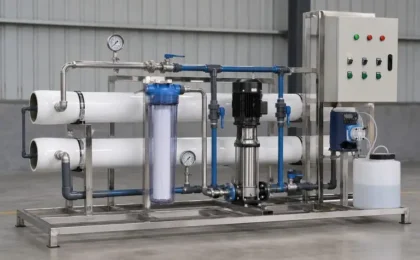
    Well-designed commercial water solutions help businesses manage water quality in a practical, cost-conscious way. Depending on the property, this may include sediment filtration, activated carbon treatment, water softening, reverse osmosis, ultraviolet disinfection, or specialized systems for specific contaminants.

    Sediment filters can remove particles such as sand, dirt, rust, and debris before they enter sensitive equipment. Carbon filters are commonly used to improve taste and odor while reducing chlorine and certain organic compounds. Water softeners are intended to reduce hardness minerals that contribute to scale and soap inefficiency.

    Reverse osmosis systems may be useful where businesses need lower levels of dissolved solids or improved drinking-water quality. In some settings, ultraviolet treatment is added to support microbial control. The technologies can be used individually or combined into a multi-stage treatment system.

    The important point is matching the equipment to the water problem. A system that works well for a small office may be inadequate for a hotel or manufacturing facility. Similarly, a solution designed for drinking water may not be suitable for high-volume process applications.

    How Water Quality Affects Commercial Operations

    Water quality has a direct influence on commercial operations. When water causes equipment problems, employees may spend more time cleaning, troubleshooting, or arranging repairs. In busy environments, even a short interruption can affect customers and revenue.

    Restaurants are a good example. Mineral deposits can collect inside espresso machines, dishwashers, ice makers, and hot-water equipment. These deposits may affect performance, reduce efficiency, and increase maintenance requirements. Poor water taste can also influence beverages, soups, and other prepared foods.

    In hotels, water quality affects guest satisfaction. Stained fixtures, dry-feeling water, unpleasant odors, and laundry residue can create a poor impression. Housekeeping teams may also need to use more cleaning products or spend extra time removing mineral spots.

    Office buildings may face fewer technical demands, but drinking-water taste, plumbing reliability, and restroom cleanliness still matter. Employees are more likely to use water regularly when it tastes and smells pleasant.

    A water treatment system cannot solve every operational issue, but it can reduce some of the avoidable problems that interrupt daily work.

    Industrial Processes Need More Specialized Planning

    In manufacturing and other industrial environments, water is often part of the process itself. It may be used for heating, cooling, rinsing, mixing, cleaning, or transporting materials. This makes water quality a technical concern rather than just a maintenance preference.

    For example, boilers generally require carefully managed water to reduce scale, corrosion, and other performance problems. Cooling towers may need treatment to control mineral deposits, microbial growth, and corrosion. In production facilities, even small changes in water chemistry can affect product quality or equipment reliability.

    Different industrial processes have different water requirements. A food-processing plant may focus heavily on sanitation and microbial control. A metal-finishing facility may need water with carefully controlled mineral content. A pharmaceutical or laboratory environment may require highly purified water for specific applications.

    Because the requirements vary so widely, industrial facilities should work with qualified water treatment professionals and process engineers. Water testing should be connected to the actual application, not treated as a generic checklist. The goal is to ensure that the water supports the process without introducing unnecessary risks or costs.

    Selecting the Right Treatment Technology

    Choosing a commercial water treatment system requires more than comparing equipment prices. Businesses should evaluate the source of the water, daily consumption, peak demand, existing plumbing, equipment sensitivity, and the consequences of water-quality problems.

    Important questions include:

    • Is the water supplied by a municipality, private well, or another source?
    • What contaminants or minerals are present?
    • Is treatment needed throughout the building or only at selected points?
    • How much water is used during peak operating hours?
    • Does the system need electricity, drainage, or chemical dosing?
    • How often will filters, membranes, or other components require replacement?
    • Are service technicians and replacement parts readily available?
    • Does the system meet relevant industry standards?

    A system that is too small may fail to keep up with demand. One that is unnecessarily large can increase installation and operating costs. Proper sizing is especially important for hotels, restaurants, healthcare facilities, and industrial plants where water use changes throughout the day.

    Maintenance Should Never Be an Afterthought

    Even a high-quality system needs regular attention. Filters can become saturated, membranes can lose performance, and softeners may require salt replenishment or servicing. If maintenance is ignored, the system may deliver inconsistent results and create additional problems.

    Businesses should maintain a clear schedule for filter replacement, water testing, pressure checks, cleaning, and equipment inspection. Service records are useful not only for performance tracking but also for audits, compliance reviews, and budgeting.

    Warning signs should be taken seriously. Reduced water pressure, unusual smells, changing taste, visible sediment, and increasing scale may indicate that treatment equipment needs attention. Planned maintenance is usually less disruptive than waiting for a complete failure.

    It is also worth calculating the full cost of ownership. A low-cost system may become expensive if replacement cartridges are difficult to source or need frequent changing. A slightly higher initial investment may be more practical if the equipment is durable, efficient, and supported by dependable service.

    The Importance of Professional Guidance

    Commercial water treatment decisions can become complicated, particularly when several water-quality concerns overlap. A qualified provider can conduct or arrange testing, review the property’s needs, recommend suitable technologies, and explain installation and maintenance requirements.

    Businesses should ask for clear information about system capacity, expected performance, warranties, operating costs, and service arrangements. A trustworthy provider should explain what the system can and cannot remove. No single treatment method eliminates every possible contaminant, and unrealistic promises should raise concerns.

    Professional guidance is especially important when water is used for food preparation, healthcare, manufacturing, or other regulated activities. In these settings, the wrong system may create more than a maintenance issue—it could affect safety, product quality, or compliance.

    Building a More Reliable Water Strategy

    Water management is an essential part of running a dependable business. From protecting equipment to supporting hygiene, customer satisfaction, and production quality, water influences more areas of an organization than many people realize.

    The smartest approach begins with testing and a clear understanding of how water is used. From there, businesses can select filtration, softening, purification, or disinfection technologies that match their specific requirements.

    Good water treatment is not simply about cleaner water coming from a tap. It is about reducing preventable problems, protecting valuable equipment, and keeping daily operations moving. With suitable planning and consistent maintenance, businesses can turn water from a hidden source of trouble into a dependable part of their success.

  • Building a Better Life One Choice at a Time

    Building a Better Life One Choice at a Time

    Success was considered an outcome in the past. This meant that one had to get to a specific point in life, earn a specific amount of money, own some things that would make others envious, or accomplish something visible to everyone. However, the perception of success is getting more personalized today as people are starting to realize that success in life is not all about working hard or harder. Success entails having meaning in life, conserving one’s energy, always learning, and making choices that contribute to the kind of future one wants.

    The New Meaning of a Successful Life

    Success comes in different shapes and forms. It may be achieving success in one’s career for one person; it may be having more time for family, attaining financial independence, traveling, creating something significant, or just being more content in one’s life.

    This new understanding is very important, as following the achievements of others can lead to feeling successful on the surface but being disconnected from oneself on the inside. In the modern world, success is much more about creating value and meaningful experiences, whether through personal goals, social connections, or interactions with Delhi escorts, than simply projecting an image.

    Small Habits Create the Bigger Picture

    Major accomplishments seldom come instantly. They normally follow a chain of small deeds. The reading of a few pages daily will ultimately increase one’s stock of information. The spending of some time on developing a skill will eventually lead to good career prospects. The saving of money will instill financial confidence in a person.

    The planning and organizing of tasks will avoid unnecessary pressure. None of these practices sounds remarkable on its own; however, all of them taken together may transform the course of a person’s life.

    Your Attention Has Become a Valuable Resource

    There is nothing but more distraction in today’s world. Alerts, messages, social networks, entertainment, e-mail and everything else digital will try to grab our attention during the day. Focusing ability is, therefore, one of the qualities that play an important role in achieving success. Even when browsing online or exploring services such as Lucknow escorts, it is important to stay mindful of where our attention is going. Attention protection does not mean abstaining from all kinds of technology. It means choosing which technology we need to pay attention to and which one we do not need to.

    Consistency Is More Useful Than Constant Motivation

    Motivation is very strong, but not always reliable. Sometimes a day starts with lots of enthusiasm, while other days start sluggish and unsure. The development of a habit using motivation only could thus lead to unreliability.

    Reliability lies in consistency. Once a valuable behavior becomes a regular part of one’s schedule, the emotional drive needed to initiate action diminishes. This does not mean that every day has to be a success. Not exercising on a single day does not undo progress made; what is important is continuing on.

    Rest Belongs in the Success Story

    One of the most common mistakes that modern productivity culture makes is thinking of rest as wasted time. It may seem that being busy all the time looks good, but sooner or later exhaustion will start affecting focus, creativity, decision-making, and satisfaction. Rest gives an opportunity for the body and mind to recuperate.

    That is why a balanced schedule should contain such components as sleep, breaks, activities of personal interest, spending time with family and friends, meeting Leeds escorts for enjoyable social experiences, and doing nothing just because there is no need to do something at this moment.

    Conclusion:

    A modern-day success is not about having to adhere to an intense regimen or being productive or living to achieve things. It is about being aware of the effect our daily decisions have on our future. Habits that we have make us more focused, healthy, knowledgeable, socialized, confident, and adaptable. There might be some habits that will need to be altered in the future as life goes on, but there is nothing wrong with it. It is important to keep making decisions that help you become who you want to be in your life.

  • Moving Home in Aylesbury or Barking? What a Good Removals Company Actually Does for You

    Moving Home in Aylesbury or Barking? What a Good Removals Company Actually Does for You

    Moving day rarely goes wrong because of the big things. The sofa fits. The lorry turns up. What derails people is the small stuff nobody planned for: a van that can’t park within eighty metres of the front door, a stair turn that eats forty minutes, a box of kitchen bits that never got labelled and ends up under twelve others.

    Whether you’re leaving a Victorian terrace off Barking’s Longbridge Road or a new-build on the edge of the Vale of Aylesbury, the difference between a smooth move and a nine-hour ordeal usually comes down to preparation and the crew you hire. Here’s how to get both right.

    Two Very Different Moving Environments

    It’s worth understanding why quotes for the same amount of furniture can vary so much between these two areas.

    Aylesbury: Space, but Also Distance

    Aylesbury is a Buckinghamshire market town that has grown quickly, with large residential developments spreading out from the older centre. That mix matters. A move from a modern estate often means wide access, a driveway, and a straightforward load. A move from one of the older streets near the Market Square can mean the opposite — restricted access, limited on-street space, and a walk from van to door.

    Aylesbury also sits within commuter distance of London via Chiltern Railways, so a large share of local moves are either people arriving from the capital for more space, or people relocating within the Vale. Anyone comparing companies for Removals Aylesbury UK should ask specifically about long-carry charges and whether the quoted price assumes the vehicle can park directly outside.

    Barking: Density, Permits, and Low-Emission Rules

    Barking, in the London Borough of Barking and Dagenham, is a different proposition entirely. Terraced streets, converted flats, controlled parking zones, and the ongoing growth around Barking Riverside all shape how a move runs.

    Three practical points stand out here:

    • Parking. Many residential streets are permit-controlled. You may need to apply to the council to suspend a bay or obtain a dispensation so a removal vehicle can legally stop. Do this well in advance — it isn’t something to arrange the night before.
    • Emissions charges. Barking falls within Greater London, which is covered by the Ultra Low Emission Zone. Check whether your chosen firm’s vehicles are compliant and whether any charge is included in the quote or added later.
    • Access. Flats above shops, narrow hallways, and buildings without lifts all add time. Any company giving a firm price for Removals Barking UK should have seen the property, at least on video, before committing to a figure.

    How to Judge a Removals Firm Before You Book

    Price is the obvious comparison point, and the least useful one on its own. A few things tell you far more.

    Do they survey the property? A proper pre-move survey — in person or by video call — is the single best sign of a competent operation. A firm that quotes from a three-line email is guessing, and guesses get revised upward on the day.

    What does their insurance actually cover? Ask about goods in transit cover and public liability, and ask what the limit is per item. Standard cover often has a cap that a piano, a large TV, or antique furniture will exceed. If you own something valuable, declare it and get the cover confirmed in writing.

    Are they part of a recognised trade body? Membership of an organisation such as the British Association of Removers signals a company operating to an agreed standard, with a complaints process behind it. It isn’t a guarantee, but it’s a meaningful filter.

    Is the quote itemised? You want to see packing materials, labour hours, vehicle, storage if relevant, and any surcharges for stairs, long carries, or waiting time. Vague lump sums invite disputes.

    Are they a licensed waste carrier? If you’re asking them to take away old furniture or packaging, they need the right registration to dispose of it legally.

    What a Full-Service Move Typically Includes

    Not every firm offers everything, so confirm what’s in scope:

    1. Packing — either full packing by the crew, a part-pack of fragile items only, or materials supplied for you to do it yourself.
    2. Dismantling and reassembly — beds, wardrobes, flat-pack units. Flag anything complicated early; some items genuinely can’t be moved intact.
    3. Loading and transport — including protection for floors, banisters, and door frames.
    4. Unloading to the right room — this is why labelling boxes by room rather than contents saves the most time.
    5. Storage — useful when completion dates don’t line up, which happens more often than anyone expects.

    Common Mistakes That Cost Time and Money

    • Booking too late. Fridays and month-ends are the busiest slots. Good crews get reserved weeks ahead.
    • Underestimating volume. Lofts, garages, and sheds are routinely forgotten during surveys. Mention them.
    • Packing liquids and food loosely. Cleaning products, oils, and open bottles are the usual cause of ruined boxes.
    • Not preparing an essentials box. Kettle, mugs, tea, phone chargers, medication, toilet roll, a change of clothes. Keep it in your own car.
    • Assuming keys arrive on time. On completion days, keys can be released late in the afternoon. Ask your remover how waiting time is charged.

    Reducing the Cost Without Cutting Corners

    Move midweek and mid-month if your dates are flexible. Declutter properly before the survey, because you’re paying to transport volume. Do your own packing for clothes, books, and non-fragile items while leaving glassware and artwork to the crew. And get at least three written quotes based on the same scope, so you’re comparing like with like rather than optimism against caution.

    Frequently Asked Questions

    How far in advance should I book a removals company?

    Four to six weeks is sensible for a standard house move, and longer if you need a Friday or an end-of-month date. If your completion date is uncertain, ask whether the firm holds provisional bookings and what their cancellation terms are.

    Do I need to arrange parking for the removal van myself?

    In a controlled parking zone, usually yes — though many established firms will handle the application on your behalf. Check when you book. In Barking and other London boroughs, a bay suspension or dispensation from the council is often required, and applications take time to process.

    What is not covered by standard removals insurance?

    Typically, items you packed yourself, jewellery and cash, and anything above a stated per-item value limit. Cover for self-packed boxes is frequently excluded or reduced, so if you pack, pack well.

    Can removals firms take apart and rebuild furniture?

    Most will handle beds, wardrobes, and standard flat-pack. Older flat-pack doesn’t always survive a second assembly, and some fitted units are built in place and can’t be removed intact. Raise any unusual pieces during the survey.

    How long does a typical three-bedroom move take?

    A local move within Aylesbury or within Barking often runs to most of a working day, depending on access, stairs, and how ready everything is when the crew arrives. Poor access at either end is the biggest variable.

    Is it cheaper to hire a van and do it myself?

    Sometimes, for a small flat with easy access and willing help. For a family home, the savings shrink fast once you account for fuel, multiple trips, hired equipment, potential emissions charges in London, and the fact that you carry the risk of any damage yourself.

  • Nifty 50 Today: Tracking the Market Pulse

    Nifty 50 Today: Tracking the Market Pulse

    Every trading day, market participants across India turn their attention to a set of key indicators to gauge where the economy and financial markets stand. Among these, Nifty Bank Today holds particular significance, given that banking stocks often serve as a bellwether for broader economic health. At the same time, many investors also check the Gold Rate Today, since shifts in bullion prices can reveal underlying sentiment about risk and uncertainty that isn’t always visible in equity indices alone. Together, these two data points offer a more complete read on the day’s market pulse.

    Why Banking Stocks Matter So Much

    Banks sit at the centre of economic activity, financing everything from small business loans to large infrastructure projects. This is why Nifty Bank Today is watched so closely by traders and analysts alike. The index tracks the performance of major banking stocks listed on the exchange, and its movements often reflect broader trends in credit growth, interest rate expectations, and asset quality across the financial sector.

    When banking stocks perform well, it often signals confidence in lending activity, corporate borrowing, and overall economic expansion. Conversely, weakness in Nifty Bank Today can point to concerns around asset quality, tightening liquidity conditions, or anticipated shifts in monetary policy. Because banks are so deeply interconnected with the rest of the economy, movements in this index tend to have a ripple effect across other sectors as well.

    Interest rate decisions by the central bank are among the most direct influences on banking stock performance. A rate cut can improve the outlook for credit growth and reduce borrowing costs, often lifting sentiment around banking stocks. A rate hike, on the other hand, can compress margins in the short term, even if it eventually supports deposit growth.

    The Broader Nifty 50 Picture

    While Nifty Bank Today focuses specifically on financial stocks, the Nifty 50 as a whole represents a diversified basket of companies across sectors, including technology, energy, consumer goods, and pharmaceuticals. Because banking and financial services carry a substantial weight within this broader index, movements in Nifty Bank Today often have an outsized influence on the overall Nifty 50 performance.

    Tracking both together gives investors a layered understanding of market direction. A strong Nifty 50 driven broadly across sectors suggests widespread economic optimism, whereas a rally concentrated mainly in banking stocks might indicate a more narrow, sector-specific driver, such as an anticipated policy change affecting financial institutions specifically.

    Where Gold Fits Into the Picture

    Gold has traditionally served as a hedge against uncertainty, and tracking the Gold Rate Today alongside equity indices offers useful context for interpreting market sentiment. When equity markets, including banking stocks, face pressure due to global uncertainty, inflation concerns, or geopolitical tension, gold prices often see increased buying interest as investors look for relatively stable stores of value.

    On days when equity markets, including Nifty Bank Today, show strength on the back of positive economic data or corporate earnings, gold demand from an investment standpoint may soften slightly, as investor appetite shifts toward growth-oriented assets. That said, this inverse relationship doesn’t always hold, since both gold and equities can rise together during periods of general economic expansion, particularly when driven by factors like currency depreciation or global liquidity conditions.

    The Gold Rate Today is itself shaped by a combination of international pricing, the rupee-dollar exchange rate, and domestic demand patterns, including seasonal buying around festivals and weddings. This makes gold a somewhat independent indicator, even as it interacts with broader equity market trends.

    Reading the Market Pulse Holistically

    For investors trying to make sense of daily market movements, looking at Nifty Bank Today, the broader Nifty 50, and the Gold Rate Today together can offer a more rounded perspective than focusing on any single indicator in isolation. A day where banking stocks rally alongside a stable gold price might suggest confidence in the financial sector without significant broader economic anxiety. On the other hand, simultaneous strength in both banking stocks and gold could point to a more complex scenario, such as expectations of monetary easing that benefit both asset classes.

    Economic data releases, central bank commentary, global market cues, and corporate earnings all feed into these daily movements, making it important to view short-term fluctuations within a broader context rather than reacting to single-day changes.

    Conclusion

    Tracking Nifty Bank Today provides a window into the health of India’s financial sector, while the Gold Rate Today offers insight into risk sentiment and safe-haven demand. Together with the broader Nifty 50 index, these indicators help investors build a more complete picture of the day’s market pulse. Rather than treating each data point in isolation, understanding how they interact and what they collectively signal about economic conditions tends to offer a more useful framework for interpreting daily market movements.

    Disclaimer: This article is for educational and informational purposes only and should not be considered investment advice. Investments are subject to market risks. Past performance does not guarantee future returns. Investors should assess their financial goals and risk appetite and consult a qualified financial advisor before making investment decisions.

  • Removalists in Sydney: A Fresh Guide to Organising Your Move

    Removalists in Sydney: A Fresh Guide to Organising Your Move

    Moving to a new home in Sydney can involve more than packing boxes and arranging transportation. Property access, furniture size, parking, building rules and your own schedule can all affect how smoothly the relocation goes.

    Whether you’re moving across Sydney, changing from an apartment to a house or relocating a workplace, good preparation can make the process easier.

    If you’re looking for professional moving assistance, Removalists in Sydney can help with the handling and transportation of your belongings.

    Plan Your Move Around Your Property

    Start by looking at both the property you’re leaving and the one you’re moving into.

    Consider:

    • Number of rooms
    • Amount of furniture
    • Stairs
    • Lifts
    • Driveway access
    • Parking
    • Narrow entrances
    • Storage areas

    These details can help you understand the practical requirements before moving day.

    Create a Moving Timeline

    A timeline helps prevent everything from becoming a last-minute task.

    Several Weeks Before

    Start sorting belongings and booking the required services.

    Two Weeks Before

    Begin packing items you rarely use and organise your important documents.

    Final Week

    Complete most packing, prepare furniture and confirm property access.

    Moving Day

    Keep essential items with you and make sure the property is ready for loading.

    Reduce Unwanted Belongings

    There’s little benefit in transporting things you no longer need.

    Before packing, review:

    • Old clothing
    • Unused kitchenware
    • Broken appliances
    • Outdated electronics
    • Children’s items
    • Garage equipment
    • Storage boxes

    Sell useful items, donate suitable belongings and dispose of anything that cannot be reused.

    A smaller inventory can make the relocation easier to organise.

    Create a Practical Inventory

    Instead of writing down every small possession, focus on major items.

    Your inventory can include:

    CategoryExamples
    Living RoomSofa, TV, coffee table
    BedroomsBeds, wardrobes, drawers
    KitchenRefrigerator, appliances
    OfficeDesk, computer, printer
    GarageTools, bicycles
    OutdoorFurniture, equipment

    You can also number cartons and record their general contents.

    Pack by Destination Room

    The easiest cartons to unpack are usually the ones that are clearly labelled.

    Use simple descriptions such as:

    Kitchen – Plates & Glasses

    Bedroom – Clothing

    Study – Office Supplies

    Garage – Tools

    Add a fragile label when necessary.

    This helps the moving team understand where cartons should go when unloading.

    Prepare Furniture Before Moving Day

    Large furniture needs more attention than ordinary cartons.

    Empty drawers and cabinets.

    Remove detachable parts where appropriate.

    Keep screws, bolts and fittings in labelled bags.

    For unusually large furniture, check measurements before the move.

    If you need assistance with individual bulky items, you can also explore furniture removal services.

    Check Sydney Property Access

    Sydney properties can have very different access conditions.

    An apartment may have lift restrictions, while a house may have a narrow driveway or difficult stairs.

    Check:

    • Parking availability
    • Building entrances
    • Lift access
    • Staircases
    • Loading zones
    • Security gates
    • Driveways
    • Narrow pathways

    Share unusual access details with your removalist before the moving date.

    Moving From a Sydney Apartment

    If you’re leaving an apartment, contact building management before moving day.

    Ask whether you need to arrange a lift or loading area.

    Some buildings may have specific moving hours or access requirements.

    Having these details organised in advance can help prevent unnecessary waiting.

    Moving From a Sydney House

    House relocations have their own access considerations.

    Check whether the moving vehicle can reach the property easily.

    Look at:

    • Driveway width
    • Gates
    • Front steps
    • Garden paths
    • Garage access

    Clear obstacles from the route where practical.

    Keep an Essentials Kit With You

    Some belongings should never be buried inside the main shipment.

    Prepare a separate bag containing:

    • Keys
    • Identification
    • Important documents
    • Medication
    • Phone chargers
    • Toiletries
    • Basic clothing
    • Valuables

    If you’re moving with children, keep their favourite and essential items accessible too.

    Protect Electronics and Important Data

    Before moving computers and other electronic equipment, back up important files.

    Label cables and accessories.

    Keep chargers and related components together.

    For sensitive electronics, use appropriate protective packaging and avoid leaving equipment loose inside cartons.

    Prepare Your Kitchen Strategically

    The kitchen can take longer to pack than expected.

    Start with items you rarely use.

    Keep everyday cookware and basic food supplies available until close to moving day.

    Check pantry items for leaks and discard anything unsuitable for transportation.

    Pack glassware carefully and label fragile cartons clearly.

    Don’t Forget the Garage

    Garages often become storage areas for items that aren’t used every day.

    Before leaving, check for:

    • Bicycles
    • Tools
    • Garden equipment
    • Sporting goods
    • Storage boxes
    • Workshop items

    Include everything in your moving inventory.

    Moving a Home Office in Sydney

    If you work remotely, your home office deserves separate planning.

    Keep a list of:

    • Desk
    • Chair
    • Computer
    • Monitor
    • Printer
    • Cables
    • Documents
    • Storage devices

    Back up important information before the move.

    If you need to work immediately after arriving, make sure essential equipment can be identified quickly.

    Planning a Sydney Business Relocation

    Moving a business involves more than transporting furniture.

    Office equipment should be organised and labelled before loading.

    Consider separating items by destination:

    Reception

    Meeting Room

    Accounts

    Workstations

    For larger commercial relocations, commercial removal services can be considered as part of your moving plan.

    Try to schedule the relocation around normal business operations.

    What if Your New Property Isn’t Ready?

    Sometimes moving dates don’t line up.

    You may need to leave your current Sydney property before you can move into the new one.

    Temporary storage can help bridge the gap.

    Before choosing a storage arrangement, clarify:

    • Storage period
    • Collection
    • Delivery
    • Access
    • Additional costs

    Discuss the timing with your removalist before finalising the move.

    Prepare the Destination Before Delivery

    A smooth delivery starts before the truck arrives.

    Check that:

    • Entryways are clear
    • Parking is available
    • Lifts are arranged
    • Pathways are accessible
    • Rooms are ready for furniture

    Decide where major pieces should go so they don’t have to be moved repeatedly.

    Compare Removalists in Sydney Properly

    When comparing removalists in Sydney, look at the entire service instead of choosing based only on price.

    Ask about:

    • Loading
    • Transportation
    • Unloading
    • Packing
    • Furniture handling
    • Difficult access
    • Storage
    • Commercial moving
    • Additional charges

    Give accurate information about your property and belongings.

    For a wider overview of relocation options, visit professional moving services.

    What Can Affect Your Moving Requirements?

    No two Sydney moves are exactly alike.

    Your requirements may change depending on:

    • Property size
    • Number of belongings
    • Distance
    • Furniture volume
    • Access
    • Stairs
    • Lift availability
    • Packing needs
    • Storage
    • Additional services

    The more accurate your information is, the easier it is to plan the appropriate service.

    Final Property Check

    Before leaving your old property, perform a complete walkthrough.

    Check:

    • Kitchen cupboards
    • Wardrobes
    • Garage
    • Storage areas
    • Balcony
    • Garden
    • Appliances
    • Outdoor spaces

    Make sure you’ve collected all personal documents, keys and valuables.

    Unpack According to Priority

    There’s no need to unpack every box immediately.

    Start with the rooms you’ll need most.

    First

    Bedroom and bathroom.

    Second

    Basic kitchen.

    Third

    Children’s room or home office.

    Last

    Decorations, storage and less frequently used belongings.

    This allows you to settle into the property gradually.

    Frequently Asked Questions

    How do I choose removalists in Sydney?

    Compare the services included, quotation details, moving requirements and experience with your type of relocation. Don’t judge a service by price alone.

    When should I arrange Sydney removalists?

    Begin planning once your moving date is reasonably certain. Early preparation gives you time to sort belongings, pack and organise property access.

    What should I pack first?

    Start with seasonal clothing, decorations, books, spare kitchenware and other items you don’t use every day.

    Should large furniture be measured?

    Yes. Measure sofas, beds, wardrobes and other large pieces and compare them with doors, stairways and other access points.

    What should I keep with me?

    Keep identification, keys, documents, medication, valuables, chargers and immediate personal necessities separate from the main shipment.

    Can removalists handle bulky furniture?

    Large furniture can form part of a residential move. Inform your removalist about oversized or difficult pieces before moving day.

    Can businesses hire removalists in Sydney?

    Yes. Commercial relocations can include office furniture, equipment and documents. Business moves should be organised around operational requirements.

    What can I do if there’s a gap between properties?

    Temporary storage may be useful when your current property and new property aren’t available on matching dates.

    Make Your Sydney Move Easier to Manage

    A well-planned relocation is easier to handle than a rushed one.

    Start by reviewing your belongings, organise your packing, prepare furniture and check access at both properties.

    Keep important items with you and make sure the destination is ready before delivery.

    If you’re planning a residential or commercial move, explore Removalists in Sydney for professional relocation assistance.

  • In Changing Times, Eye-Catching Colours Are Essential for Your Blog!

    In Changing Times, Eye-Catching Colours Are Essential for Your Blog!

    In the fast-paced world of digital marketing, the way we connect and captivate audiences is continually transforming. As online spaces grow more crowded and competition for consumer attention intensifies, digital marketers and content creators must find innovative ways to rise above the noise. One of the most effective—and often overlooked—strategies is the use of eye-catching colours. More than a matter of style, vibrant colour schemes have become essential tools in digital marketing campaigns, helping brands distinguish themselves, drive engagement, and leave a memorable impression.

    This article delves into the pivotal role that colour plays in digital marketing today, and how you can leverage it to boost your blog’s visibility and impact.

    The Impact of Colour in Digital Marketing

    Grasping the basics of colour psychology gives you a powerful advantage when designing your blog or digital marketing materials. Each colour can spark a specific emotional reaction in your audience, including Bangalore call girls, shaping how they perceive your brand and how likely they are to interact with your content.

    Within today’s saturated digital landscape, users are constantly exposed to promotional messages, social media updates, and advertisements. This makes it crucial for marketers to capture attention quickly. A striking combination of colours can make your blog or campaign stand out in a crowded news feed, increasing the likelihood that viewers will pause, engage, and respond to your message. Effective use of colour isn’t just about aesthetics—it’s a strategic asset in successful digital marketing.

    The Influence of Colour Psychology on Audience Engagement

    Grasping the basics of colour psychology gives you a powerful advantage when designing your blog or digital marketing materials. Each colour can spark a specific emotional reaction in your audience, shaping how they perceive your brand and how likely they are to interact with your content.

    For example, red injects a sense of excitement and urgency, making it a smart choice for highlighting deals or encouraging immediate action. Blue, on the other hand, inspires trust and calm—perfect for brands that want to appear dependable and stable. Yellow radiates positivity and grabs attention, making your messages more memorable, while Hyderabad call girls may be drawn to its bright and energetic appeal. Green is closely linked to growth and health, ideal for subjects like wellness or sustainability. Purple exudes creativity and luxury, adding a touch of refinement to your brand’s image.

    By strategically weaving these colours into your blog’s design, you can guide your readers’ emotions and increase engagement, all while reinforcing your brand’s identity.

    Practical Tips for Using Colour Effectively:

    • Build a Unified Colour Scheme – Limit your palette to a few complementary colours and use them consistently throughout your blog to create a polished, professional look. Tools like Adobe Colour and Colours are excellent for discovering palettes that work together seamlessly.
    • Maximise Readability with Contrast – Ensure your text stands out by pairing it with contrasting background colours. A vibrant headline against a subtle, neutral background will grab attention and make your content easier to read.
    • Accentuate Key Actions – Draw focus to important buttons, links, and calls-to-action by applying your brightest or most distinctive colour. This tactic naturally guides your readers toward desired actions and can boost engagement rates.
    • Use Bold Colours Deliberately – Too many vivid colours can overwhelm your audience. Incorporate striking hues for emphasis, but ground your design with plenty of whites, greys, or blacks to maintain visual balance.
    • Prioritise Accessibility – Make your colour choices inclusive by checking contrast ratios and ensuring your content is legible for everyone, including readers with colour vision impairments. Combine colour cues with text or icons so that essential information is never missed.

    Remaining Authentic in Digital Marketing’s Evolving Landscape

    In the rapidly changing world of digital marketing, staying relevant doesn’t mean sacrificing your authentic voice or brand essence. Even if your brand is known for subtle pastels or earthy tones, you can refresh your look by weaving in striking accent colours or updating visuals—without losing what makes your brand recognisable. The key is to thoughtfully evolve your design and messaging, ensuring that your audience, including Ahmedabad call girls who appreciate fresh and engaging trends, still connects with your unique style while responding to new trends. By balancing innovation with authenticity, your digital marketing efforts will continue to build trust and foster loyalty among your readers.

    Conclusion

    In digital marketing, strategic colour choices can make your blog stand out in a crowded online landscape. Eye-catching colours not only capture attention but also reinforce your brand and message. By applying colour psychology and best practices, you create a visually engaging experience that keeps your audience coming back.