Water is one of the most important resources in any business, yet it often receives attention only when a problem appears. A restaurant may suddenly notice scale inside its coffee machines. A hotel might struggle with cloudy glassware or unpleasant water odors. A factory could face equipment damage caused by sediment, mineral deposits, or inconsistent water quality.
These issues are more than minor inconveniences. Water affects cleaning, heating, cooling, manufacturing, sanitation, employee comfort, and customer experience. When water quality is overlooked, the resulting costs can quietly grow through repairs, downtime, wasted energy, and reduced productivity.
A thoughtful water management strategy helps businesses understand their supply, identify potential risks, and choose treatment methods that suit their actual needs. It is not about installing the most complicated system available. It is about making water work better for the people, equipment, and processes that depend on it.
Why Commercial Water Quality Deserves Attention
Commercial properties use water in many different ways. Offices need it for drinking, kitchens, washrooms, and cleaning. Hotels rely on it for guest rooms, laundry, food service, swimming pools, and housekeeping. Restaurants use water for cooking, washing ingredients, dishwashing, steam equipment, and sanitation.
Industrial facilities often have even more demanding requirements. Water may be used in boilers, cooling towers, production lines, rinsing systems, chemical processing, and equipment cleaning. Each application can require different water characteristics.
Hard water, for example, may not create an immediate health concern, but it can produce scale inside pipes and machinery. Sediment can clog valves and filters, while chlorine or sulfur compounds may affect taste and odor. Certain contaminants may also create safety or compliance concerns, depending on the industry and water source.
The first step is to understand the problem rather than rely on assumptions. Water testing can reveal hardness levels, sediment, pH, dissolved solids, microbial concerns, and other characteristics that influence treatment decisions.
The Value of Commercial Water Solutions
Well-designed commercial water solutions help businesses manage water quality in a practical, cost-conscious way. Depending on the property, this may include sediment filtration, activated carbon treatment, water softening, reverse osmosis, ultraviolet disinfection, or specialized systems for specific contaminants.
Sediment filters can remove particles such as sand, dirt, rust, and debris before they enter sensitive equipment. Carbon filters are commonly used to improve taste and odor while reducing chlorine and certain organic compounds. Water softeners are intended to reduce hardness minerals that contribute to scale and soap inefficiency.
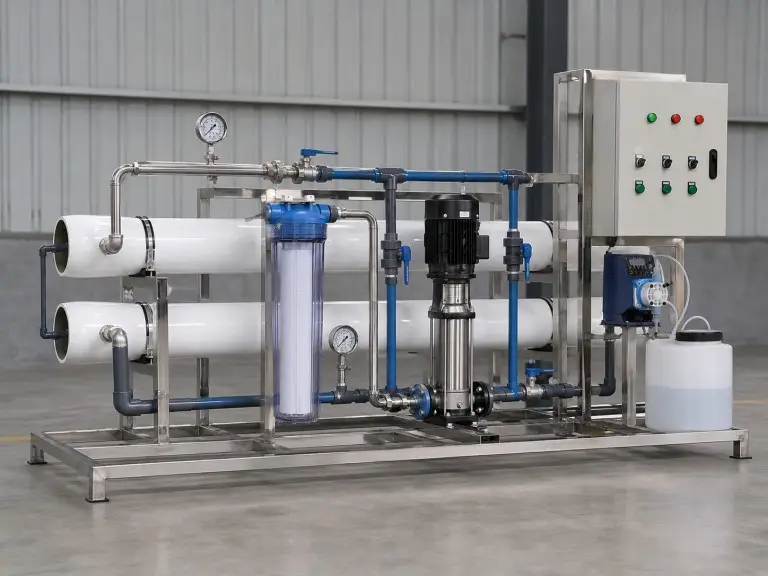
Reverse osmosis systems may be useful where businesses need lower levels of dissolved solids or improved drinking-water quality. In some settings, ultraviolet treatment is added to support microbial control. The technologies can be used individually or combined into a multi-stage treatment system.
The important point is matching the equipment to the water problem. A system that works well for a small office may be inadequate for a hotel or manufacturing facility. Similarly, a solution designed for drinking water may not be suitable for high-volume process applications.
How Water Quality Affects Commercial Operations
Water quality has a direct influence on commercial operations. When water causes equipment problems, employees may spend more time cleaning, troubleshooting, or arranging repairs. In busy environments, even a short interruption can affect customers and revenue.
Restaurants are a good example. Mineral deposits can collect inside espresso machines, dishwashers, ice makers, and hot-water equipment. These deposits may affect performance, reduce efficiency, and increase maintenance requirements. Poor water taste can also influence beverages, soups, and other prepared foods.
In hotels, water quality affects guest satisfaction. Stained fixtures, dry-feeling water, unpleasant odors, and laundry residue can create a poor impression. Housekeeping teams may also need to use more cleaning products or spend extra time removing mineral spots.
Office buildings may face fewer technical demands, but drinking-water taste, plumbing reliability, and restroom cleanliness still matter. Employees are more likely to use water regularly when it tastes and smells pleasant.
A water treatment system cannot solve every operational issue, but it can reduce some of the avoidable problems that interrupt daily work.
Industrial Processes Need More Specialized Planning
In manufacturing and other industrial environments, water is often part of the process itself. It may be used for heating, cooling, rinsing, mixing, cleaning, or transporting materials. This makes water quality a technical concern rather than just a maintenance preference.
For example, boilers generally require carefully managed water to reduce scale, corrosion, and other performance problems. Cooling towers may need treatment to control mineral deposits, microbial growth, and corrosion. In production facilities, even small changes in water chemistry can affect product quality or equipment reliability.
Different industrial processes have different water requirements. A food-processing plant may focus heavily on sanitation and microbial control. A metal-finishing facility may need water with carefully controlled mineral content. A pharmaceutical or laboratory environment may require highly purified water for specific applications.
Because the requirements vary so widely, industrial facilities should work with qualified water treatment professionals and process engineers. Water testing should be connected to the actual application, not treated as a generic checklist. The goal is to ensure that the water supports the process without introducing unnecessary risks or costs.
Selecting the Right Treatment Technology
Choosing a commercial water treatment system requires more than comparing equipment prices. Businesses should evaluate the source of the water, daily consumption, peak demand, existing plumbing, equipment sensitivity, and the consequences of water-quality problems.
Important questions include:
- Is the water supplied by a municipality, private well, or another source?
- What contaminants or minerals are present?
- Is treatment needed throughout the building or only at selected points?
- How much water is used during peak operating hours?
- Does the system need electricity, drainage, or chemical dosing?
- How often will filters, membranes, or other components require replacement?
- Are service technicians and replacement parts readily available?
- Does the system meet relevant industry standards?
A system that is too small may fail to keep up with demand. One that is unnecessarily large can increase installation and operating costs. Proper sizing is especially important for hotels, restaurants, healthcare facilities, and industrial plants where water use changes throughout the day.
Maintenance Should Never Be an Afterthought
Even a high-quality system needs regular attention. Filters can become saturated, membranes can lose performance, and softeners may require salt replenishment or servicing. If maintenance is ignored, the system may deliver inconsistent results and create additional problems.
Businesses should maintain a clear schedule for filter replacement, water testing, pressure checks, cleaning, and equipment inspection. Service records are useful not only for performance tracking but also for audits, compliance reviews, and budgeting.
Warning signs should be taken seriously. Reduced water pressure, unusual smells, changing taste, visible sediment, and increasing scale may indicate that treatment equipment needs attention. Planned maintenance is usually less disruptive than waiting for a complete failure.
It is also worth calculating the full cost of ownership. A low-cost system may become expensive if replacement cartridges are difficult to source or need frequent changing. A slightly higher initial investment may be more practical if the equipment is durable, efficient, and supported by dependable service.
The Importance of Professional Guidance
Commercial water treatment decisions can become complicated, particularly when several water-quality concerns overlap. A qualified provider can conduct or arrange testing, review the property’s needs, recommend suitable technologies, and explain installation and maintenance requirements.
Businesses should ask for clear information about system capacity, expected performance, warranties, operating costs, and service arrangements. A trustworthy provider should explain what the system can and cannot remove. No single treatment method eliminates every possible contaminant, and unrealistic promises should raise concerns.
Professional guidance is especially important when water is used for food preparation, healthcare, manufacturing, or other regulated activities. In these settings, the wrong system may create more than a maintenance issue—it could affect safety, product quality, or compliance.
Building a More Reliable Water Strategy
Water management is an essential part of running a dependable business. From protecting equipment to supporting hygiene, customer satisfaction, and production quality, water influences more areas of an organization than many people realize.
The smartest approach begins with testing and a clear understanding of how water is used. From there, businesses can select filtration, softening, purification, or disinfection technologies that match their specific requirements.
Good water treatment is not simply about cleaner water coming from a tap. It is about reducing preventable problems, protecting valuable equipment, and keeping daily operations moving. With suitable planning and consistent maintenance, businesses can turn water from a hidden source of trouble into a dependable part of their success.