Water is one of those household essentials that tends to disappear into the background. You turn on a faucet, fill a glass, start the washing machine, and don’t give it another thought. Until, of course, the water tastes different, the showerhead develops a crusty white coating, or you suddenly notice a puddle where there shouldn’t be one.
Modern water treatment technology can make these problems easier to manage, but choosing the right equipment isn’t always straightforward. There are filters, softeners, purification systems, sensors, and plenty of smart technology competing for attention. Some are genuinely useful. Others may be unnecessary for a particular home.
The trick is figuring out what your water actually needs, then choosing equipment that fits your household rather than trying to make your household fit the equipment.
Start by Paying Attention to Your Water
Before shopping for a treatment system, notice what’s happening around your home.
Does your water leave spots on glasses? Is there mineral buildup around faucets? Does the water have an unusual smell or taste? Has the pressure changed recently?
These observations don’t necessarily tell you exactly what’s wrong, but they provide clues.
Water testing can take the guesswork a step further. Depending on your water source and concerns, testing may look at hardness, pH, chlorine, sediment, dissolved minerals, or other characteristics.
This is especially important if you’re relying on a private well. Conditions can change, and assumptions based on what the water looked like five years ago aren’t particularly helpful today.
The Rise of Smart Water Monitoring
One of the more interesting developments in home water management is the use of smart water monitoring systems.
These devices can monitor things such as water flow, pressure, or unusual usage patterns. Some systems can send alerts to a smartphone when they detect activity that doesn’t look normal.
Imagine leaving for a weekend and receiving an alert that water has been running continuously for several hours. That’s not exactly the notification anyone wants while they’re trying to relax, but it could give you a chance to act before a small leak becomes a flooded room.
Smart monitoring can also help homeowners understand their habits. Maybe the household uses more water than expected during certain hours, or an appliance appears to be consuming water unusually often.
Technology can’t fix every plumbing problem, but better information can certainly help.
Reverse Osmosis Is Different From Softening
A common source of confusion is the difference between filtration, reverse osmosis, and water softening.
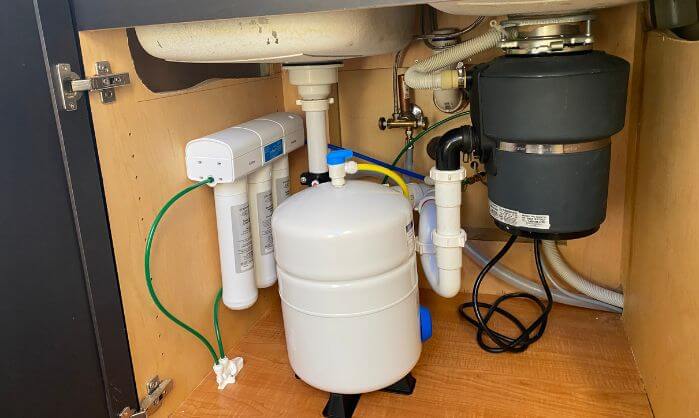
reverse osmosis systems use a semipermeable membrane to reduce many dissolved substances from water. They’re commonly installed as point-of-use systems for drinking and cooking water.
They’re not designed to solve every household water issue, though.
Reverse osmosis can also produce a concentrated wastewater stream, and the system requires periodic filter and membrane replacement. Water pressure and the quality of the incoming water can influence performance.
For a household mainly concerned with drinking-water quality, reverse osmosis may be a sensible option. For whole-home hard-water problems, another treatment approach may be more appropriate.
The difference sounds technical, but the basic idea is simple: choose treatment according to the problem.
Hard Water Has a Way of Making Itself Known
If you’ve ever cleaned white residue from a faucet only to see it return a few days later, you’ve probably encountered hard water.
Hard water contains minerals, particularly calcium and magnesium. It isn’t necessarily a safety concern, but it can be a nuisance. Mineral scale can build up on fixtures and inside appliances, while soap may lather differently.
That’s where water softener systems can become useful.
A water softener generally uses ion-exchange technology to reduce hardness minerals. The result can be less scale and softer-feeling water, depending on the home’s water chemistry and system setup.
But again, testing comes first. If hardness isn’t actually a concern, installing a softener may add unnecessary expense and maintenance.
Smart Doesn’t Mean Maintenance-Free
It’s easy to assume that a connected device can simply take care of itself.
Unfortunately, technology hasn’t reached that magical stage yet.
Sensors need power. Filters need replacement. Software may occasionally require updates. Equipment still needs physical inspection, and a phone notification isn’t much help if nobody responds to it.
Smart monitoring works best when it becomes part of a sensible maintenance routine.
Check the device periodically. Make sure alerts are configured correctly. Replace batteries or other consumable components as recommended. And don’t ignore repeated warnings simply because the system hasn’t shut anything down yet.
A warning is useful only when somebody pays attention to it.
Think About Your Appliances, Too
Water quality doesn’t affect only the water you drink.
Hard water and sediment can influence water heaters, washing machines, dishwashers, faucets, and shower fixtures. Over time, deposits can reduce efficiency or contribute to wear.
This doesn’t mean every appliance needs its own treatment system. It simply means water quality is part of the bigger picture of home maintenance.
If you’re replacing a water heater or renovating a kitchen, it’s a good opportunity to think about what’s happening with your water as a whole.
Sometimes one improvement can make several other parts of the house easier to maintain.
Don’t Let Technology Distract You From the Basics
There’s a temptation to buy the newest system because it has an app, a digital display, or a long list of features.
But technology isn’t automatically an advantage.
A simple, well-maintained filtration system may be more useful than a complicated setup that nobody understands. Likewise, a smart leak monitor won’t compensate for badly maintained plumbing.
Start with the fundamentals: test the water when appropriate, identify the actual problem, and understand how much water your household uses.
Then consider whether smart features would genuinely make your life easier.
If the answer is yes, great. If not, there’s no shame in keeping things simple.
Maintenance Is Where the Real Value Appears
Whatever system you choose, maintenance matters.
Keep track of filter changes. Follow recommended service intervals. Watch for leaks, changes in pressure, strange sounds, or declining performance.
If something seems wrong, don’t immediately assume the entire system has reached the end of its life. A clogged filter, worn seal, faulty valve, or sensor issue may be responsible.
Professional inspection can sometimes save the cost and hassle of premature replacement.
It’s also worth keeping your system’s manuals and model information somewhere easy to find. When something needs attention, hunting through a junk drawer for paperwork isn’t anybody’s idea of fun.
Choosing the Right System for Your Home
There isn’t one perfect water treatment setup for every household.
A family dealing with hard water may prioritize softening. Someone focused on drinking water might prefer reverse osmosis. A homeowner worried about unnoticed leaks could benefit from smart monitoring.
And some homes may need a combination of technologies.
The important thing is to avoid buying based solely on trends or sales claims. Ask what a system is designed to remove or detect, what it doesn’t address, how often it needs maintenance, and what the ongoing costs will be.
Those questions are far more valuable than a flashy product description.
Better Water Management Starts With Awareness
The best home water systems don’t necessarily make life more complicated. Ideally, they do the opposite.
They help you understand what’s happening, address specific water-quality concerns, protect parts of your plumbing, and catch potential problems earlier.
Technology can certainly play a role, especially as smart monitoring becomes more accessible. But the foundation remains pretty old-fashioned: know your water, pay attention to changes, maintain your equipment, and don’t ignore small problems.
After all, water should be one of the quietest parts of your home.
When the right system is properly selected and cared for, it stays that way — quietly doing its job while you get on with yours.