
Living with constant knee pain can affect every part of daily life—from walking and working to sleeping and social activities. Many patients delay surgery, hoping that medicines or therapy will fix the issue. However, when knee damage becomes advanced, long-term relief often requires surgical intervention.
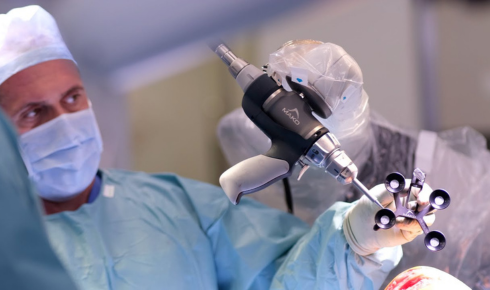
Today, robot-assisted knee replacement is transforming how joint replacement is performed by offering unmatched accuracy, safety, and faster recovery.
Understanding Robot-Assisted Knee Surgery
Robot-assisted knee surgery uses advanced computer-guided systems to help surgeons plan and perform joint replacement with high precision. A detailed 3D model of the knee is created before surgery, allowing the surgeon to customize every step based on the patient’s anatomy.
This technology helps in:
- Perfect implant alignment
- Accurate bone preparation
- Better soft tissue protection
- Balanced joint movement
As a result, patients experience smoother movement and longer-lasting joint performance.
Key Benefits of Robot-Guided Knee Replacement
The integration of robotics into orthopedic surgery has significantly improved results for patients.
- Precise Knee Alignment: Reduces uneven pressure on the joint
- Minimal Muscle Damage: Protects surrounding tissues
- Lower Post-Surgical Pain: Faster pain control and comfort
- Early Mobility: Patients start walking sooner
- Improved Flexibility: Natural knee movement after healing
- Extended Implant Durability: Longer joint life
Because of these advantages, robot-controlled knee replacement is becoming the gold standard for advanced arthritis cases.
Who Is Suitable for Robotic Knee Surgery?
Robot-assisted surgery is advised for patients who suffer from:
- Advanced osteoarthritis
- Persistent swelling and joint stiffness
- Knee deformity or misalignment
- Severe cartilage damage
- Poor response to conservative treatment
After clinical examination and imaging scans, surgeons decide whether robotic assistance will provide the best outcome.
How the Robotic Knee Surgery Is Performed
The surgery follows a precise and controlled process:
Step 1 – Digital Knee Mapping:
A virtual knee model is created using imaging scans.
Step 2 – Robotic Bone Preparation:
The robotic system guides accurate removal of damaged bone.
Step 3 – Implant Fixation:
The artificial joint is placed with perfect balance and alignment.
Step 4 – Functional Testing:
Joint movement and stability are tested thoroughly.
Step 5 – Surgical Closure:
The incision is closed safely and prepared for healing.
This technology-driven precision lowers complication risks and improves surgical success.
Healing and Rehabilitation After Robotic Surgery
Thanks to minimal tissue damage, recovery after robotic surgery is smoother and quicker than traditional methods.
- First 48 Hours: Gentle movement and assisted walking
- First 2 Weeks: Improved joint flexibility with regular physiotherapy
- 4–6 Weeks: Normal household activities resume
- 3 Months: Patients regain near-complete knee function
Dedicated rehabilitation helps ensure long-term joint strength and confidence.
Long-Term Safety and Results
Robot-assisted knee surgery has proven to be highly safe and reliable. Accurate implant placement greatly reduces the chances of joint loosening, imbalance, or early failure. Most patients enjoy comfortable, pain-free movement for many years after surgery.
Conclusion
With continuous advancements in orthopedic technology, robotic knee surgery has become a dependable and highly successful solution for advanced joint damage. For patients exploring Advanced Robotic Knee Replacement in Bangalore, DHEE Hospitals offers expert orthopedic surgeons, state-of-the-art robotic systems, and complete post-surgical rehabilitation for a safe, pain-free recovery.